Software Development
Human Augmentation: The Imminent Transformation
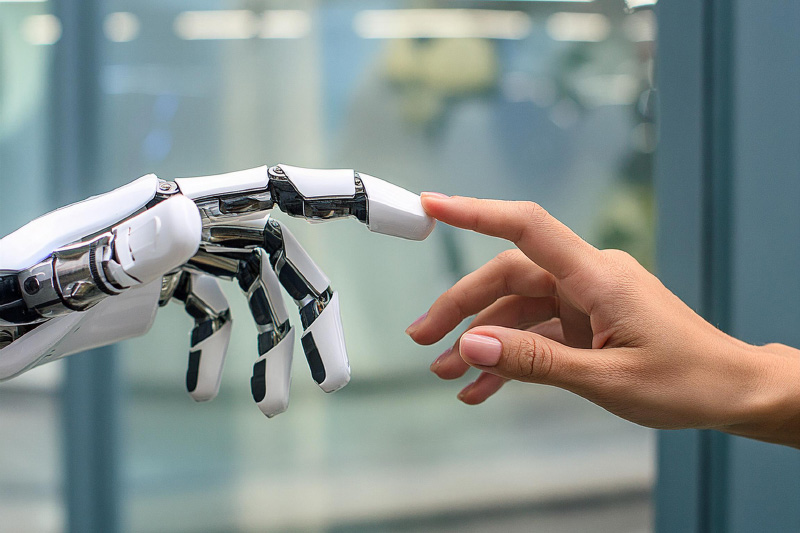
Technological innovation knows no bounds, and Human Augmentation represents the next frontier in human evolution. In the coming years, we will witness the emergence of revolutionary technologies aimed at expanding our cognitive, physical, and sensory abilities, opening the doors to an unprecedented future.
Brain Chips and Wearable Devices: The Future of Software Development
At the heart of this transformation are brain chips and wearable devices. These cutting-edge devices will blend with our bodies and minds, offering us unparalleled control over the world around us and our own capabilities.
For software developers, the implications are immense. Wearable devices, such as smart glasses, will provide instant and hands-free access to information, code, documentation, and real-time data. This will allow them to consult relevant information without constantly switching screens, significantly enhancing efficiency and productivity.
Brain Implants: Thought Becomes Code
A further step forward is represented by brain implants. Elon Musk, CEO of Neuralink, recently received approval to begin trials on implanting brain chips in humans. This revolutionary technology has the potential to radically transform how we work, interacting with the digital world.
Imagine a future where developers don't need to type a single line of code. Simply by thinking about the keys they want to press on a keyboard, the implanted chip will automatically translate these thoughts into code, greatly speeding up the coding process and optimizing software delivery.
A Future of Opportunities for Software Development
Human Augmentation represents not only a challenge but also a huge opportunity for the world of software development. New technologies will provide developers with the tools to create more powerful, intuitive, and accessible applications and software than ever before.
OpenBCI: An Example of Neurotechnology
A concrete example of how Human Augmentation is already transforming software development is the neural interface of OpenBCI. This device allows users to control computers and other devices with brain activity alone. The OpenBCI neural interface is still under development, but it has the potential to revolutionize how we interact with technology.
Concrete Examples: Neural Interfaces and Augmented Reality
In addition to the already mentioned OpenBCI neural interface, several other examples demonstrate the potential of Human Augmentation in software development. Among these:
- Remote Control of Software and Devices: to control software and devices through neural interaction or with just eye movement.
- More Intuitive Software Development: to create more intuitive and natural software interfaces that adapt to our individual needs.
- Immersive Augmented and Virtual Reality: Human Augmentation can be combined with augmented reality (AR) and virtual reality (VR) to create more engaging immersive experiences. This could have a significant impact on sectors such as education, training, and entertainment.
Conclusion
Human Augmentation is an unstoppable phenomenon that will radically transform the way we live, work, and interact with the world. For software developers, this transformation represents a unique opportunity to shape the future of technology and create a better world for everyone.
As a software development company, we are excited to be part of this revolution and to contribute to the development of innovative solutions that leverage the potential of this technology to improve people's lives.

Carlo Vassallo
You might be interested in
Talk to our experts
START YOUR FREE PROJECT DESIGN
Tell us about your project, we'll give you a clear roadmap.
One of our experts will contact you within 24 hours with an initial free assessment.