App Development
Low Code Development & Zero-Code Development: A Revolution in Application Development

In the context of digital transformation, SMEs (Small and Medium Enterprises) are seeking innovative solutions that allow them to stay competitive without investing significant resources. This is where Low-Code and Zero-Code development (also known as No-Code Development) comes into play.
These approaches are revolutionizing the way companies create applications and manage their digital processes. But what exactly are they? And how can they help SMEs innovate? In this article, we will explore the world of Low-Code and Zero-Code in detail, highlighting benefits, challenges, and future prospects.
What is Low-Code Development?
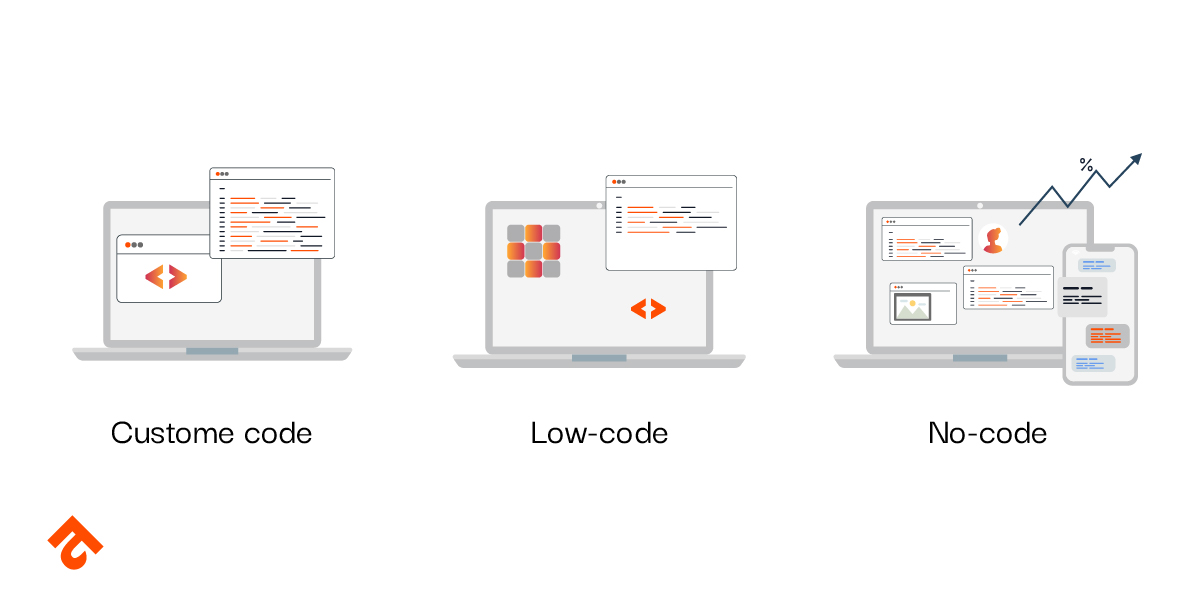
Low-Code Development is a software development approach that drastically reduces the need to write code manually, using visual tools and drag-and-drop interfaces instead. This method enables developers, even those with limited technical skills, to create complex applications more quickly and efficiently compared to traditional methods.
Low-Code relies on platforms that offer predefined components and templates that can be combined to create software solutions. These platforms, like OutSystems, provide an intuitive development environment that significantly simplifies the application creation process.
Key Differences from Traditional Software Development
Compared to traditional development, Low-Code allows for a drastic reduction in the time and resources needed to complete a project. Developers can focus on business logic and user experience, while the platform automatically handles much of the underlying code.
Key Benefits
- Speed: Applications can be developed and deployed much faster, accelerating time-to-market.
- Reduced Costs: Automating development processes reduces labor and maintenance costs.
- Ease of Use: Visual and intuitive interfaces simplify the development process, even for those with less experience.
What is Zero-Code Development?
Zero-Code Development goes a step further than Low-Code, allowing applications to be developed without writing any code. This approach uses even simpler graphical interfaces, making it accessible to those without any technical skills.
Zero-Code relies on platforms that offer completely visual tools, where every component of the application is configured through predefined options and standard modules. These platforms are ideal for creating quick software solutions and managing business processes without involving professional developers.
How It Differs from Low-Code
While Low-Code still requires a minimal understanding of code and development logic, Zero-Code is designed to be used by anyone, without the need for technical skills. This makes it particularly useful for companies that wish to democratize application development internally.
Key Benefits
- Accessibility for Non-Developers: Allows anyone within an organization to create and manage applications, regardless of technical skills.
- Ease of Implementation: Zero-Code applications can be developed and implemented extremely quickly, with minimal technical difficulties.
Benefits for Companies
Adopting Low-Code and Zero-Code solutions offers numerous advantages to companies, especially in terms of digital transformation.
Reduction in Development Costs
These approaches allow for cost savings related to labor and infrastructure, as they require fewer developers and less time to complete projects.
Shortening of Development Times
Thanks to the visual and modular nature of Low-Code and Zero-Code platforms, companies can develop and launch new applications much faster than with traditional methods.
Greater Flexibility and Adaptability
Low-Code and Zero-Code platforms offer a high degree of flexibility, allowing companies to quickly adapt their applications to new market demands or customer requests.
Challenges and Limitations of Low-Code and Zero-Code
Despite the numerous benefits, it's important to also consider the challenges and limitations associated with these approaches.
Technical Limitations
Low-Code and Zero-Code platforms may have limitations in terms of advanced features and customization, making them less suitable for highly complex projects.
Security and Compliance Risks
Relying on third-party platforms for application development and management can pose security and compliance risks, especially if the platforms do not adhere to strict data protection standards.
Customization Difficulties
While Low-Code platforms offer a certain flexibility, they may not be able to meet very specific needs without custom developments, thus limiting customization capability.
Conclusion
The future of Low-Code and Zero-Code is promising, with growing adoption among both SMEs and large companies. Platforms will continue to evolve, offering increasingly advanced features and overcoming current limitations. As technology progresses, we can expect these tools to become ever more integrated into business processes, further facilitating digital transformation and continuous innovation.
In a world where execution speed and flexibility are crucial, Low-Code and Zero-Code represent a key to success for modern companies, offering effective solutions to tackle the challenges of the global market. If you're interested in exploring examples of low-code platforms or want to better understand what low code is, visit our website Astrorei.io to learn more.

Valerio Buzzelli
You might be interested in
Talk to our experts
START YOUR FREE PROJECT DESIGN
Tell us about your project, we'll give you a clear roadmap.
One of our experts will contact you within 24 hours with an initial free assessment.