App Development
The 5 Best Frameworks for Developing Cross-Platform Apps
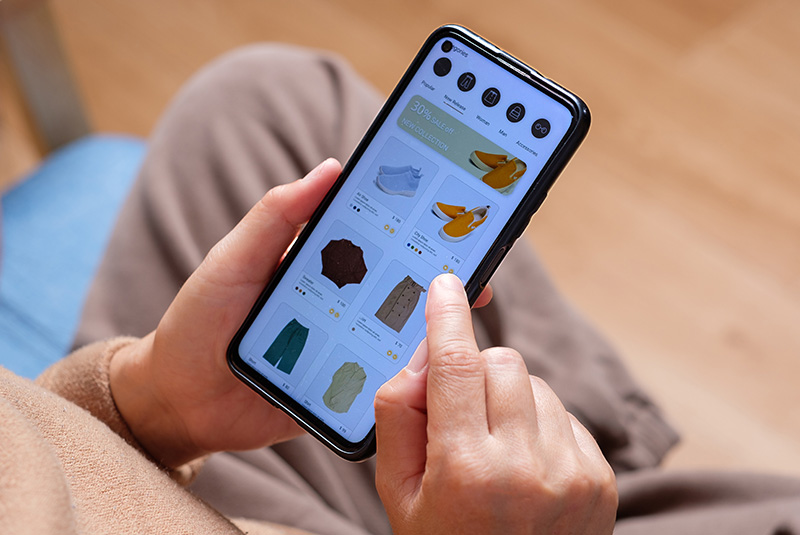
Cross-platform or hybrid apps are now an excellent alternative to native and web apps. They are developed to be compatible with the various operating systems currently on the market. Creating this type of app allows you to reach more people and consequently increase the number of potential customers.
The growing popularity of rapidly evolving cross-platform mobile development technology has led to the emergence of many new tools on the market. With so many options available, it can be difficult to choose the one that best suits your needs. To help you find the right tool, we have put together a list of the six best cross-platform app development frameworks and the features that make them exceptional.
The Best Frameworks for Cross-Platform Apps
For cross-platform app development, mobile development frameworks are often used to create native-looking applications for multiple platforms, such as Android and iOS, using a single codebase. Shared code is one of the main advantages of this approach compared to native app development. Having a single codebase means developers can save time by avoiding the need to write code for each operating system, speeding up the development process.
With the growing demand for cross-platform solutions for mobile app development, the number of available tools on the market is also increasing. At this point, it's time to understand the best technologies or platforms to use for developing cross-platform apps.
This article lists the best technologies and their main features to help you choose the one that perfectly matches your company's needs. Here they are:
Flutter
The first technology is definitely Flutter. It is an open-source development kit created by Google. This kit can be used to create mobile apps (Android, iOS), web, and desktop apps (Windows, macOS, Linux) from a single codebase. To create applications with Flutter, Google's Dart programming language is used.
Programming language: Dart.
App examples: eBay, Alibaba, Google Pay, ByteDance.
Main features:
- Flutter's hot reload feature allows you to see how the app changes with each code modification, without having to recompile it.
- Supports Google's Material Design, a design system that helps developers create digital experiences through visual and behavioral widgets during app creation.
- Flutter does not rely on web browser technology, having its own rendering engine to draw widgets, which allows for better performance and generally smoother usage.
- It has a relatively active global community, being widely used by many developers.
React Native
React Native is a framework based on the JavaScript language. It was developed in 2015 (a bit before Flutter) by Meta (formerly Facebook). It is based on the React framework and allows developers to create cross-platform mobile apps rendered natively.
Programming language: JavaScript, Typescript.
App examples: Skype, Bloomberg, Shopify, various small modules in Facebook and Instagram.
Main features:
- Developers can immediately see their changes in their React components, thanks to the Fast Refresh feature.
- In versions 0.62 and later, integration between React Native and Flipper is enabled by default. Flipper is used to debug native Android, iOS, and React apps and provides tools such as a log viewer, an interactive layout inspector, and a network inspector.
- As one of the most popular cross-platform app development frameworks, React Native has a large and strong developer community that shares technical knowledge.
Kotlin Multiplatform Mobile
Kotlin Multiplatform Mobile is an SDK developed by JetBrains for creating Android and iOS applications. It allows you to share common code between the two platforms and write platform-specific code only when necessary, for example, when creating native UI components or working with platform-specific APIs.
Programming language: Kotlin.
App examples: Philips, Baidu, Netflix, Leroy Merlin.
Main features:
- Multiplatform Mobile can be easily integrated into existing projects.
- Kotlin Multiplatform Mobile offers full access to the user interface. You can use the latest UI frameworks, such as SwiftUI and Jetpack Compose.
- Developers have easy access to Android and iOS SDKs without any restrictions.
- Although this cross-platform mobile development framework is the youngest on the list, it has a mature community and comprehensive, regularly updated documentation.
Ionic
Ionic is an open-source UI toolkit released in 2013. It helps developers create hybrid applications for mobile and desktop devices using a combination of native and web technologies, such as HTML, CSS, and JavaScript, with integrations for Angular, React, and Vue.
Programming language: JavaScript, TypeScript.
App examples: T-Mobile, BBC, EA Games.
Main features:
- Ionic is specifically designed for mobile development, providing a greater number of usable components.
- Uses Cordova and Capacitor plugins to provide access to built-in device features, such as the camera, flashlight, GPS, and audio recorder.
- Has its own IDE called Ionic Studio, designed for app creation and prototyping.
- There is constant activity on the Ionic Forum, where community members share knowledge and help each other overcome development challenges.
NativeScript
This open-source mobile application development framework was initially released in 2014. NativeScript allows you to create Android and iOS mobile apps using JavaScript or Typescript and frameworks such as React, Angular, Vue, and Svelte.
Programming language: JavaScript, TypeScript.
App examples: Daily Nanny, Strudel, Breethe.
Main features:
- NativeScript allows developers to easily access native Android and iOS APIs.
- The framework renders native platform user interfaces. Apps created with NativeScript run directly on a native device without relying on WebViews.
- Offers various plugins and predefined app templates, eliminating the need for third-party solutions.
Our team has extensive experience in this field and can help you create the hybrid app that fits your needs. Our know-how will be at your disposal, and step by step, we will develop the app for you just as you imagined it. Contact us now and together we will make your project a reality and improve your business image!

Davide Cerato
You might be interested in
Talk to our experts
START YOUR FREE PROJECT DESIGN
Tell us about your project, we'll give you a clear roadmap.
One of our experts will contact you within 24 hours with an initial free assessment.