Software Development
Intelligent Pipelines: The Evolution of Continuous Integration with Machine Learning
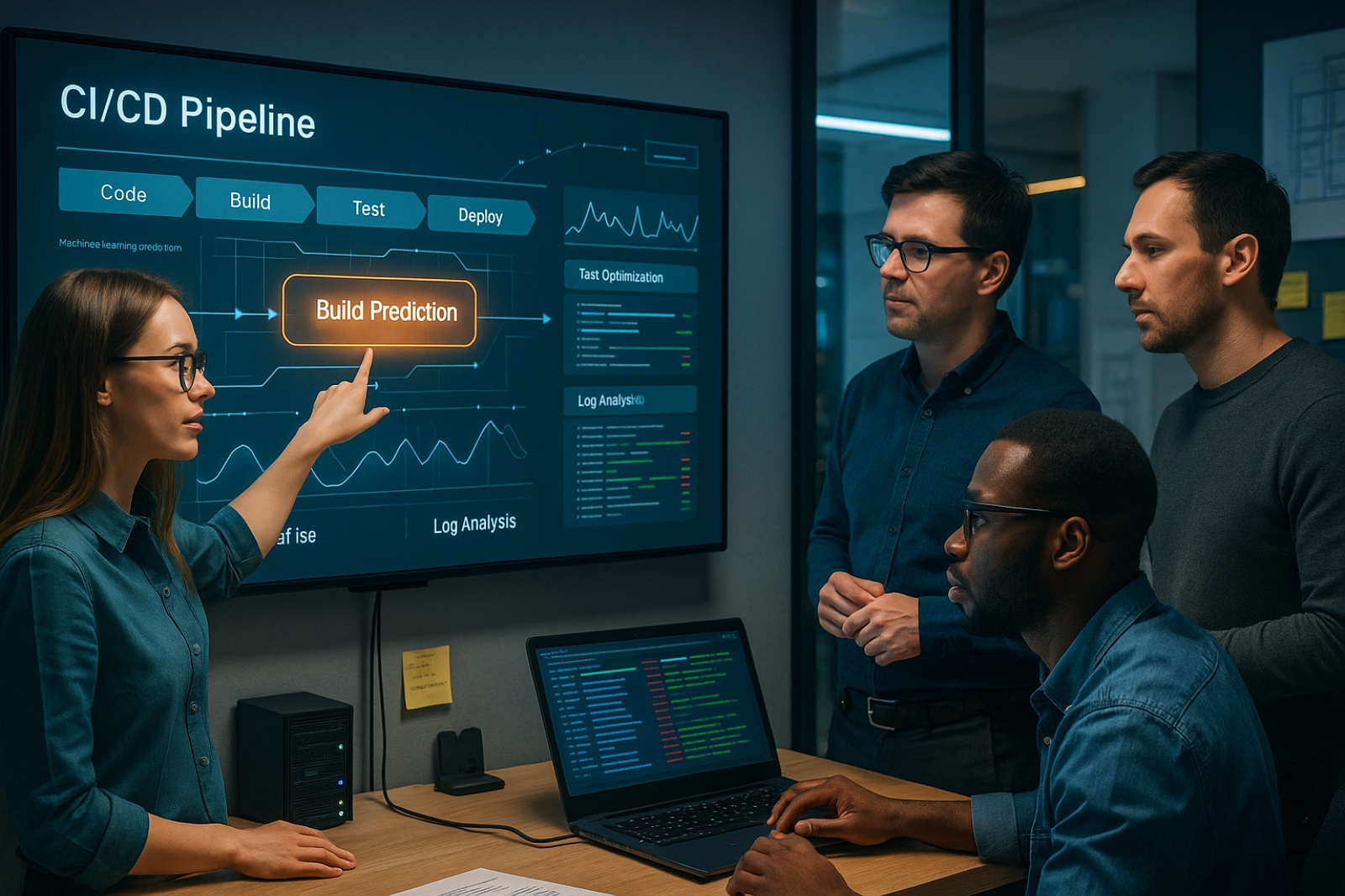
In recent years, DevOps practices have revolutionized software development, promoting automation, collaboration, and faster release cycles. Continuous Integration (CI) has become a fundamental pillar, enabling continuous code integration and timely error detection.
However, with the increasing complexity of systems and the rising volume of data, traditional CI/CD pipelines show limits in terms of prediction and optimization. In this context, "intelligent pipelines" emerge: CI/CD workflows enhanced by Machine Learning (ML) algorithms that introduce predictive and adaptive capabilities into the software lifecycle.
What is a Traditional CI/CD Pipeline
A traditional CI/CD pipeline automates the stages of building, testing, and deploying software. Tools like GitLab CI, Jenkins, and GitHub Actions orchestrate these processes, ensuring that every code change is consistently tested and deployed.
However, these pipelines primarily operate on deterministic logic and static rules. They lack the capability to learn from historical data or dynamically adapt to new conditions, limiting their effectiveness in complex and rapidly evolving environments.
When CI Meets Machine Learning
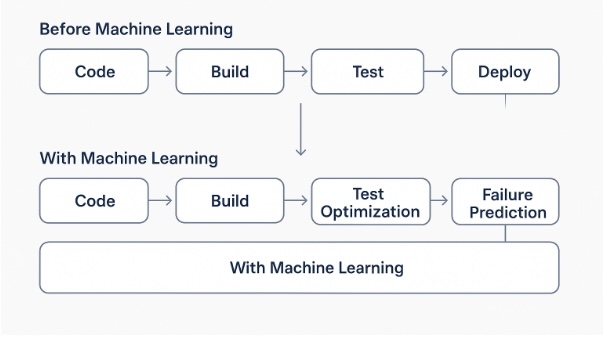
The integration of Machine Learning into CI/CD pipelines paves the way for an "intelligent" or data-driven approach. Through the analysis of data generated during development processes, it is possible to:
- Predict build times: using regression models to estimate build duration based on code and configuration characteristics.
- Identify bottlenecks: detecting stages in the process that cause recurring slowdowns.
- Optimize tests (test prioritization): selecting and ordering tests based on the likelihood of detecting errors, thus reducing feedback time.
- Prevent recurrent failures: analyzing failure patterns to anticipate and mitigate similar errors in the future.
These capabilities transform these tools from reactive to proactive systems, enhancing software efficiency and quality.
Practical Examples of Evolved CI/CD Flows
The adoption of intelligent pipelines is already a reality in several organizations.
- Deploy time optimization: companies like Facebook use ML to dynamically select the most relevant tests, reducing the time needed for software release.
- Integrated ML models for error prediction: some enterprises implement models that analyze code changes to predict build failure probability, enabling preventive interventions.
- Automatic log analysis for proactive diagnosis: advanced tools analyze build logs to identify anomalies and suggest corrections, improving system stability.
These examples highlight how artificial intelligence can significantly enhance DevOps practices.
Benefits of ML Integration in Pipelines
- Reduction of feedback times: by prioritizing the most critical tests, developers receive quicker feedback on changes made.
- Better build stability: predictive analysis allows identifying and correcting potential issues before they manifest.
- Adoption of more intelligent release strategies: approaches like canary deploys or progressive delivery benefit from predictive data to manage releases more safely and efficiently.
- Constant data-driven evolution: intelligent pipelines continuously learn from data, refining their predictions and optimizations over time.
These advantages translate into higher software quality and reduced operational costs.
Useful Technologies and Frameworks
To implement intelligent pipelines, a combination of ML and DevOps tools can be used. Here are some relevant tools.
- Pipeline-compatible ML tools: libraries such as TensorFlow, scikit-learn, and PyCaret offer capabilities for building predictive models that can be integrated into pipelines.
- Advanced DevOps tools that integrate machine learning: platforms like Harness, CircleCI Insights, and GitHub Copilot for CI offer advanced features for intelligent process automation.
For a more comprehensive view on structuring automation and continuous delivery pipelines for machine learning systems, it's useful to consult the Google Cloud technical guide on MLOps, which describes best practices, architectures, and operational models for ML integration in complex DevOps environments.
The choice of tools depends on the project's specific needs and existing infrastructure.
How Astrorei Embraces This Evolution
Astrorei positions itself as a cutting-edge technology partner, offering advanced DevOps solutions that integrate Machine Learning to optimize CI/CD processes. With a team of experts and an innovation-oriented approach, we are capable of designing and implementing tailored data-driven automation, adapted to the specific needs of each client.
Challenges and Considerations
Despite numerous advantages, adopting intelligent pipelines presents some challenges:
- Data quality: ML models require accurate and representative data to provide reliable predictions.
- Overfitting: there is a risk that models become too adapted to historical data, losing predictive capability on new scenarios.
- Complexity of setup: integration requires specific expertise and careful planning.
To tackle these challenges, a gradual approach is advisable, starting with pilot projects and involving experts in these specific areas.
Conclusion
Intelligent pipelines represent a significant evolution in DevOps practices, introducing predictive and adaptive capabilities that improve software efficiency and quality. By integrating Machine Learning into CI/CD processes, companies can anticipate issues, optimize resources, and accelerate release cycles.
Astrorei is ready to accompany you on this journey of innovation.
Whether you're seeking a technology partner to innovate your DevOps processes or a developer curious to work on advanced projects that integrate AI and automation, at Astrorei you will find a stimulating and forward-thinking environment.
FAQs - Frequently Asked Questions
How is increasing complexity in CI/CD pipelines managed with the introduction of Machine Learning?
Integrating Machine Learning into CI/CD pipelines introduces new challenges, such as managing non-deterministic models and the need to continuously monitor model performance in production. To address these complexities, adopting MLOps practices is crucial, which include:
- Model versioning: use tools like MLflow or DVC to track different versions of models and associated data.
- Continuous monitoring: implement monitoring systems to detect drift in data or model performance.
- Automated retraining: configure pipelines that can automatically retrain models when performance degradations are detected.
These practices help maintain scalable and reliable pipelines, even with the complexity introduced by ML.
What are the main challenges in integrating Machine Learning into existing CI/CD pipelines?
The main challenges include:
- Dependency management: ML models often depend on specific library versions and environments, making dependency management complex.
- Computational requirements: training and inference of models can require significant computational resources, affecting build and deploy times.
- Testing and validation: validating ML models is more complex than traditional software, as performance can vary with different data.
Addressing these challenges requires a careful approach to pipeline design and the adoption of specific tools and practices for ML.
How to ensure the security of CI/CD pipelines that integrate Machine Learning models?
Security of CI/CD pipelines with ML can be ensured through:
- Access control: implement strict access policies to limit who can modify models or data.
- Artifact validation: verify the integrity of models and data before deployment to prevent the introduction of malicious code or data.
- Dependency monitoring: use dependency analysis tools to identify and mitigate known vulnerabilities in used libraries.
These measures help protect the entire lifecycle of the model and maintain trust in the system.
Is it possible to integrate pre-trained Machine Learning models into CI/CD pipelines?
Yes, it is possible to integrate pre-trained models into CI/CD pipelines. However, it's important to consider:
- Compatibility: ensure the model is compatible with the production environment.
- Customization: evaluate if the pre-trained model needs fine-tuning to adapt to the application's specific data.
- Licensing: check the licenses associated with the model to ensure legal compliance.
Integrating pre-trained models can accelerate development, but requires careful evaluation to ensure effectiveness and compliance.
How to monitor the effectiveness of Machine Learning models in production?
Monitoring the effectiveness of models in production is crucial to ensure optimal performance. Common practices include:
- Metric tracking: collecting metrics such as accuracy, precision, recall, etc., to evaluate model performance.
- Drift detection: identifying changes in input data that could affect model performance.
- Feedback loop: implement mechanisms to gather feedback from users or downstream systems to continuously improve the model.
Adoption of monitoring and alerting tools helps keep models effective over time.

Bajram Hushi
You might be interested in
Talk to our experts
START YOUR FREE PROJECT DESIGN
Tell us about your project, we'll give you a clear roadmap.
One of our experts will contact you within 24 hours with an initial free assessment.