Software Development
MVP: What It Is and Why It Is Essential
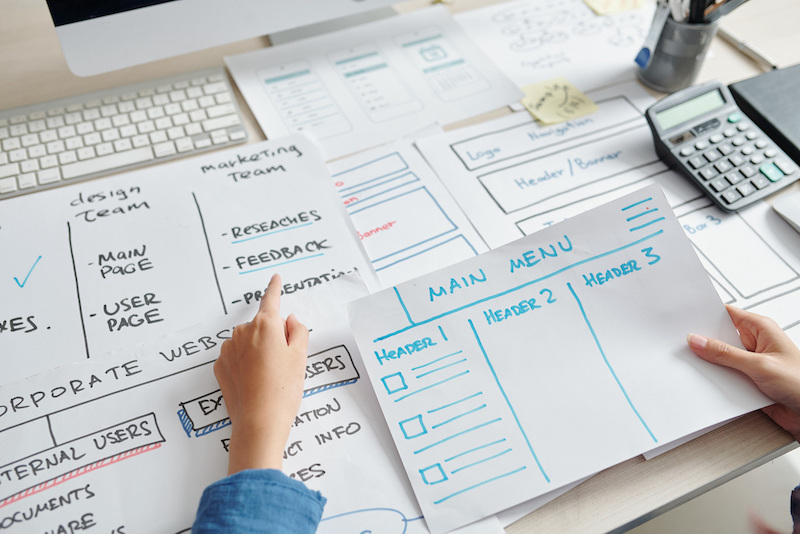
Eric Ries, author of The Lean Startup, defines the MVP as the first version of a new product that enables the team to gather the maximum amount of feedback and useful information from users with minimal effort. The MVP or Minimum Viable Product is an indispensable step for creating the final product as it allows for the collection of product hypothesis validations from the early stages of design. For this reason, it is one of the milestones of the agile approach to project management.
What is an MVP
As we have seen, it is the first streamlined version of a new product, which has reduced functionalities but is still usable and testable. At this point, you are surely wondering what the difference is between an MVP and a prototype. The prototype, in general, serves to verify and demonstrate that you have the technical capabilities to create the product and to ensure that the necessary technology for development exists or can be invented. The MVP is created in a phase subsequent to the prototype. Its purpose is to validate the hypotheses of a product, containing all or some functionalities of the final product and being usable. Although in reality, the distinction is often not that clear-cut, what certainly distinguishes a prototype from an MVP are the context and the approach with which they are developed: the latter is always created with an agile development perspective.
MVP and Agile Development
Release early, release often. This means starting to release reviewed, refined, and increasingly complete versions of the product right from the start: a system that allows you to get feedback from users immediately, reducing waste and applying continuous improvements. For this reason, it is a tool closely related to the agile methodology. In fact, the production process of an MVP is an integral part of the agile development mindset, where development is an iterative and continuous process, in which you build, measure, and learn with each modification and each added feature.
The Advantages of the MVP
The main advantage is certainly understanding the customer's needs and interests in the product without having to develop it completely, resulting in savings in terms of time, cost, and team effort, allowing you to test initial functionality hypotheses and formulate new ones. We can then say that it allows future decisions to be based on facts (and not suppositions) and adds credibility to the product, ensuring that the final product achieves the Product Market Fit.
Practical Examples of Minimum Viable Product
After understanding what it is and what the advantages are, let's see the types of MVPs in practice:
- Core feature: Developing only the main functionality relative to the entirety of the final product. Thus, it involves developing the most important functionality first.
- Concierge: A smart technique that replaces a complicated technical product with human intervention. By simplifying the product and replacing automated components with humans, with minimal design time, you can test the key question of all projects: "Does anyone want what I am building?"
- Wizard of OZ: A great illusion: The provided product seems like a fully functioning software, but in reality, only the interface is developed, and the functionalities that seem automated are performed manually. The advantages are numerous: before developing everything, you can establish a priority scale and decide what to develop first and what later based on customer choices in using the product.
- Piecemeal: A product or service is provided using a combination of already existing tools. These tools, which are often third-party software or applications, are mixed to offer a new product: in short, the whole is greater than the sum of its parts. This type can save a lot of time: it can be easier to fill specific gaps with a third-party service or app rather than dedicating time to developing the product from scratch.
MVP Development in Astrorei
For a software house with an agile development approach like Astrorei, developing MVPs is essential. It is one of the steps we always propose to our clients because it helps them understand, from the early stages of development, whether the product they have in mind meets their expectations and market demands. The types of MVPs we most frequently develop when dealing with software and apps are the core features and piecemeal, which allow us to optimize the workflow of our team and offer the client a quick service at a competitive price, obtaining a final product that meets high-quality standards.

Bajram Hushi
You might be interested in
Talk to our experts
START YOUR FREE PROJECT DESIGN
Tell us about your project, we'll give you a clear roadmap.
One of our experts will contact you within 24 hours with an initial free assessment.